Key Takeaways
- Twisted Rope is manufactured by twisting multiple strands together to create a durable and flexible rope structure suitable for industrial applications.
- It is widely used across marine, agriculture, transportation, packaging, and construction industries.
- Twisted ropes offer excellent grip, strong knot holding ability, flexibility, and long service life.
- Material selection such as HDPE and polypropylene influences performance and application suitability.
- Industries can obtain dependable and application-focused rope solutions by choosing a reputable twisted rope manufacturer.
A rope may appear like a simple industrial product at first glance, but in reality, it plays a major role in daily operations across multiple sectors. From securing fishing nets at ports and tying agricultural loads to handling transportation requirements and industrial packaging, ropes quietly support activities that keep businesses moving. Among the different rope constructions available today,. Twisted Rope continues to remain one of the most preferred options because of its practical design, durability, and ease of handling.
The demand for twisted rope has grown steadily because industries require products that are not only strong but also easy to manage during everyday use. The spiral construction gives this rope flexibility and strength while allowing workers to handle it comfortably. AtRope Tech India Private Limited, we understand these industrial requirements and focus on delivering rope solutions that match practical working environments. As a recognised Twisted Rope Manufacturer, our goal is to supply rope products that support long-term industrial performance.
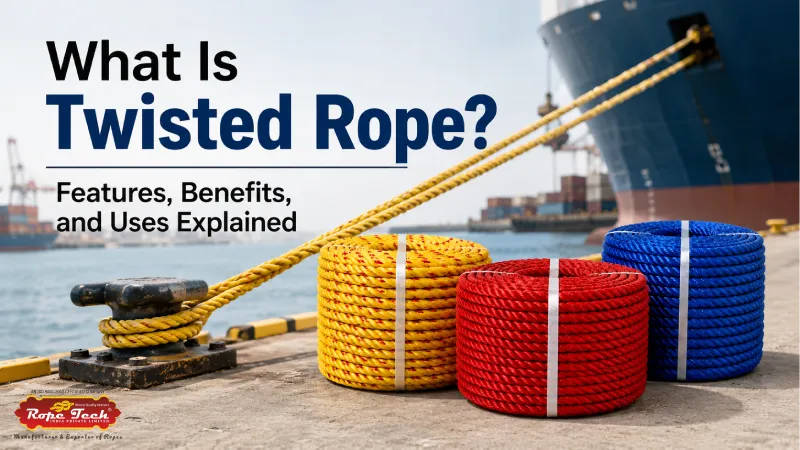
What Is Twisted Rope?
Twisted Rope is manufactured by twisting several yarns, fibres, or strands together in a spiral arrangement to create a single rope body. In most cases, three strands are twisted individually and then combined in the opposite direction to form the final rope. This construction method creates a balanced rope structure with improved flexibility and handling characteristics.
The reason industries continue choosing twisted ropes is simple. Their structure supports load distribution while maintaining strength and usability. Unlike some rope constructions that focus mainly on load-bearing, twisted ropes provide a balance between durability and practical operation.
The basic manufacturing process generally includes:
- Selection of raw material such as HDPE, polypropylene, nylon, or natural fibres.
- Strand formation by twisting fibres together.
- Combining multiple strands to form the final rope.
- Quality checks and finishing processes before industrial use.
As an experienced Twisted Rope Exporter, Rope Tech India Private Limited focuses on producing ropes suitable for different industrial environments and applications.
Key Features of Twisted Rope
1. Strong Tensile Performance
One of the primary reasons industries prefer Twisted Rope is its ability to handle pulling forces effectively. The twisted structure distributes tension across the rope body, helping maintain operational strength during usage.
This feature becomes particularly useful in sectors such as:
- Marine operations
- Agriculture
- Packaging units
- Transportation industries
- Fishing applications
- Construction handling activities
For companies searching for dependable industrial rope solutions, working with a trusted Twisted Rope Manufacturer becomes important because manufacturing quality directly affects performance.
2. Excellent Grip and Easy Handling
Twisted ropes naturally offer a better grip because their textured construction creates surface friction. Workers handling ropes daily often prefer this design because it supports easier tying, pulling, and knot formation.
Some practical advantages include:
- Better hand control
- Easier knot creation
- Convenient handling during loading operations
- Improved operational efficiency
This simple feature significantly improves usability in real industrial environments.
3. Flexible Construction for Daily Operations
Flexibility plays a major role in rope performance. Ropes used in packaging, transportation, marine work, and agriculture must bend, coil, and adapt easily without becoming difficult to manage.
The spiral structure of Twisted Rope allows:
- Easy storage
- Simple transportation
- Better coiling ability
- Operational convenience
At Rope Tech India Private Limited, we focus on producing rope solutions that support both durability and practical usage.
4. Suitable for Outdoor Industrial Conditions
Many industries use ropes in outdoor settings where environmental exposure becomes unavoidable. Depending on the selected material, twisted ropes can support applications in open environments for extended operational periods.
Industries often source products from experienced Twisted Rope Exporter companies because application conditions vary significantly across sectors.
Major Benefits of Using Twisted Rope
Long-Term Industrial Durability
Durability remains one of the strongest reasons behind the popularity of Twisted Rope. Industrial users generally prefer products that continue performing across repeated operational cycles.
The twisted construction supports:
- Repeated handling
- Continuous industrial usage
- Heavy-duty operational activities
- Multi-purpose applications
This makes twisted ropes suitable for industries looking for practical and dependable solutions.
Better Knot Holding Capability
One noticeable advantage of Twisted Rope is its knot holding ability. Because of the textured surface and strand arrangement, knots stay more stable during usage.
Applications where this becomes useful include:
- Packaging operations
- Agriculture tying work
- Transportation securing activities
- Fishing operations
- Warehouse handling tasks
This characteristic contributes directly to operational convenience.
Cost-Effective Multi-Industry Solution
Materials with diverse uses and constant performance are frequently preferred by businesses.Twisted ropes fit this requirement because they can be used across different sectors without major changes in handling practices.
At Rope Tech India Private Limited, we work with industries requiring dependable rope products for practical daily operations.
Good Shock Absorption Properties
In applications involving movement or fluctuating loads, shock absorption becomes important. Twisted rope structures can absorb tension changes effectively compared to rigid alternatives.
Common Materials Used in Twisted Rope Manufacturing
Different materials affect rope characteristics significantly. A reliable Twisted Rope Manufacturer generally selects materials based on end-use requirements.
HDPE Twisted Rope
HDPE ropes are widely used because they combine lightweight properties with durability. These ropes are commonly found in:
- Fishing industries
- Marine applications
- Agriculture operations
- Packaging sectors
Polypropylene Twisted Rope
Polypropylene ropes are preferred where lightweight handling and flexibility are required.
Common applications include:
- Industrial packaging
- Marine activities
- Transportation sectors
- General handling operations
Nylon Twisted Rope
Nylon ropes are often selected where flexibility and strength become important considerations.
Natural Fibre Twisted Rope
Traditional sectors still use natural fibre ropes for specific industrial and agricultural applications.
As an experienced Twisted Rope Exporter, Rope Tech India Private Limited supports various industrial rope requirements.
Industrial Uses of Twisted Rope
Marine Industry
Marine activities continue to remain one of the biggest users of Twisted Rope. Ports, fishing operations, and docking applications depend on ropes for daily work.
Common uses include:
- Boat handling
- Dock support
- Fishing net operations
- Mooring applications
- Equipment handling
Agriculture Sector
Agriculture requires reliable tying and handling solutions. Twisted ropes help farmers manage operational tasks effectively.
Applications include:
- Crop bundling
- Equipment tying
- Packaging activities
- Load handling
Construction Industry
Construction sites frequently use ropes for handling activities and material movement support.
Packaging and Logistics
Packaging industries rely on ropes for securing goods during movement and storage.
Common applications include:
- Package binding
- Load securing
- Warehouse operations
- Transportation handling
As a recognised Twisted Rope Manufacturer, Rope Tech India Private Limited supplies products suitable for these demanding industries.
Why Choose Us
At Rope Tech India Private Limited, we believe industrial products should offer more than basic functionality. We focus on manufacturing rope solutions designed for practical applications and long-term use. As a trusted Twisted Rope Manufacturer and established Twisted Rope Exporter,we work with industries requiring consistency, durability, and reliable product quality. Our approach combines manufacturing experience, quality-focused production, and understanding of industrial needs. We work closely with customers to provide rope products suitable for marine, agriculture, packaging, construction, and industrial sectors while maintaining product standards that support operational performance.
Conclusion
Twisted Rope continues to remain one of the most practical rope solutions across industries because it combines strength, flexibility, easy handling, and wide application suitability. Its spiral construction supports daily operations in marine, agriculture, construction, packaging, transportation, and industrial sectors. From securing loads to supporting handling activities, twisted rope plays an important role in improving operational efficiency. At Rope Tech India Private Limited, we continue developing rope products that match industrial expectations and support long-term usability. Choosing the right rope supplier always matters because product quality directly influences performance, handling experience, and application success.
Looking for premium Twisted Rope solutions for industrial and daily applications? Contact Rope Tech India Private Limited at +91 90545 25258 or email marketing@ropetechindia.com to discuss your rope requirements.