Key Takeaways
- Stretch film is essential for maintaining load stability, protecting products during transportation, and reducing movement risks.
- As a leading stretch film manufacturer, Rope Tech India offers tailored packaging solutions for various industrial needs.
- Understanding different stretch film types helps businesses select the best option for their specific application requirements.
- Efficient packaging practices using stretch film can improve operational efficiency and simplify warehouse handling processes.
- Stretch film adapts to various product shapes, ensuring secure wrapping for uneven or irregularly shaped items.
Rope Tech India Private Limited is a leading stretch film manufacturer in India, offering flexible packaging materials for industries, warehouses, logistics operations and agricultural businesses.
Products may be securely packed before leaving the factory, but keeping them protected through multiple stages of loading, stacking and delivery can be challenging. Without proper wrapping, even well-arranged cartons can shift, separate or become damaged. Stretch film helps address this everyday packaging challenge.
Many businesses in India rely on stretch film to hold goods firmly together while keeping packaging lightweight and easy to manage. Because it stretches easily, keeps loads secure and works with various wrapping techniques, this film is suitable for packing anything from individual boxes to large, palletized shipments.
Knowing the working principles of stretch film and the applications of its different varieties allows companies to choose packaging that meets their specific needs.
Understanding Stretch Film and Its Working Process
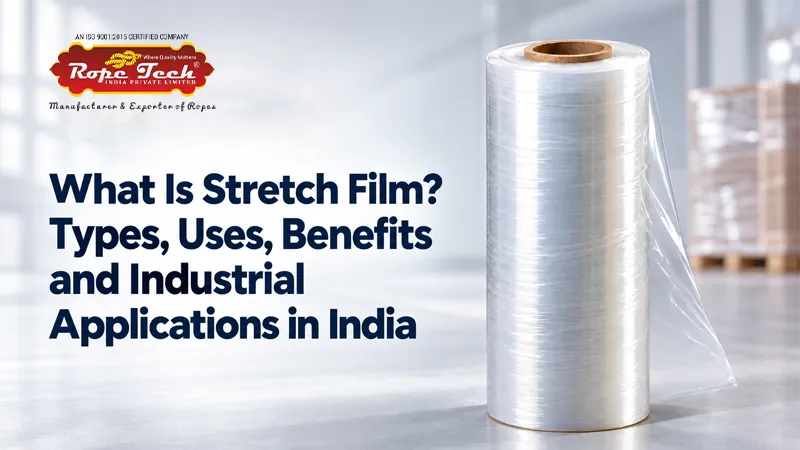
Stretch film is a thin, stretchable plastic film commonly produced from Linear Low-Density Polyethylene (LLDPE). It is applied around cartons, products or loaded pallets to hold them together during storage and transportation.
Its working principle is straightforward. Wrapping the material tightly around goods creates a pulling force that helps keep the items together. As the material attempts to recover its original dimensions, it applies a holding force that helps restrict product movement.
Pallet wrapping films generally feature a self-clinging surface, allowing one layer to stick to another without requiring separate adhesives.
This combination of flexibility, elasticity and holding force makes stretch film particularly useful for securing multiple packages into a single handling unit.
Exploring the Main Varieties of Stretch Film
Different packaging environments require different wrapping methods. Three important categories are machine stretch film, hand stretch film and agricultural silage film.
1. Machine Stretch Film for Industrial Packaging
Designed specifically for mechanical packaging systems, machine stretch film works with both fully automated and partially automated wrapping machines. It is commonly used in factories, distribution centres and high-volume warehouses where pallets are wrapped regularly.
Machine wrapping equipment applies controlled tension and can provide consistent film distribution around a load.
The Stretch Tech machine film range includes thickness options from 9 to 30 microns, with pre-stretch capabilities varying by film grade.
Common applications include:
- Wrapping palletized industrial goods.
- Stabilizing cartons for distribution.
- Packaging building materials and ceramics.
- Preparing products for warehouse storage.
- Securing bulk shipments for transportation.
For facilities that need faster wrapping operations and consistent packaging results, machine-grade stretch film is a practical option.
2. Hand Stretch Film for Manual Wrapping
Businesses with manual packaging processes can use hand stretch film to secure their products without investing in automated wrapping equipment.
Workers can wrap goods directly by hand or use a simple dispenser, making this film convenient for storage facilities, smaller production units and retail supply operations.
The Stretch Tech hand film range includes thicknesses from 5 to 30 microns and roll widths between 390 and 500 mm.
Hand film is useful for wrapping smaller pallet loads, bundling cartons and securing products with irregular dimensions.
Its portability also allows packaging teams to wrap goods at different locations within a facility.
3. Agricultural Silage Stretch Film
Agricultural silage film is designed specifically for wrapping forage bales.
Unlike conventional pallet wrap, silage film helps create a low-oxygen environment required for controlled fermentation and forage preservation.
The Stretch Tech silage film range includes multilayer films in 500 mm and 750 mm widths, with thicknesses of 22 to 25 microns.
These films are designed for agricultural bale-wrapping operations where suitable sealing properties and outdoor durability are important.
Key Benefits of Using Stretch Film
Stretch film has become a practical packaging material because it supports several everyday industrial needs.
1. Helps Maintain Load Stability
Stretch wrapping holds cartons and products together, helping reduce unwanted movement during forklift handling, stacking and transportation.
2. Protects Against Dust and Dirt
A properly wrapped load receives an additional protective covering that limits direct exposure to dust, dirt and incidental moisture.
However, standard stretch film should not be considered a substitute for fully waterproof packaging.
3. Adapts to Different Product Shapes
Whether the shipment contains square boxes, round containers or differently arranged pallet loads, stretch film can adjust to their shapes during wrapping.
Choosing a suitable stretch film grade requires evaluating how heavy the goods are, their physical dimensions and the texture of their surfaces.
4. Supports Efficient Packaging
Hand wrapping provides operational flexibility, while machine wrapping supports repetitive, high-volume packaging.
High pre-stretch films can also increase the usable film length during application, depending on equipment settings and load requirements.
5. Improves Warehouse Handling
Stretch film holds separate packages together as one stable pallet load, simplifying warehouse storage, material movement and transportation.
These advantages make it relevant to businesses looking for practical industrial packaging materials.
Industrial Applications of Stretch Film in India
Stretch film serves a wide range of Indian industries because of its versatility and ease of application.
| Industry | Stretch Film Applications |
|---|---|
| Manufacturing | Securing finished goods, cartons and industrial components |
| Logistics and Warehousing | Pallet stabilization, storage and dispatch |
| Food and Beverage | Wrapping packaged beverages, cartons and distribution pallets |
| Construction Materials | Bundling packaged tiles, bricks and building products |
| Textile Industry | Wrapping fabric cartons and packaged garments |
| Retail and E-commerce | Grouping products for warehouse handling and distribution |
| Agriculture and Dairy | Wrapping forage bales with specialized silage film |
Different industries have their own packaging challenges, depending on the products they handle and how those products are transported. Packaging construction supplies often calls for stronger load retention and better resistance to tearing or punctures compared with wrapping lighter consumer goods.
How Stretch Film Differs from Shrink Film
Although both materials serve packaging purposes, people often mistake stretch film for shrink film because of their similar applications.
However, their application methods are different.
Stretch film is pulled around goods under tension. Its elasticity holds the load together without requiring heat.
Shrink film is applied around products and then exposed to heat, causing the film to contract around them.
Stretch film is commonly selected for pallet stabilization and bundling, while shrink film is often used for retail packs and individual product wrapping.
Understanding this difference helps businesses select packaging materials based on their actual handling requirements.
How to Choose the Right Stretch Film for Your Business
Film thickness alone cannot determine whether a packaging material is suitable for a particular application. Companies need to evaluate every stage of their packaging operations before deciding which film best suits their requirements.
Five important selection factors are:
- Load Weight: Evaluate how heavy the wrapped products are and how they are arranged.
- Film Thickness: Choose an appropriate gauge based on handling conditions and required performance.
- Stretch Performance: Review the film's ability to elongate while maintaining suitable holding force.
- Puncture Resistance: Consider sharp corners, irregular surfaces and demanding handling conditions.
- Wrapping Method: Determine whether manual or machine application is more suitable for the packaging volume.
Consulting an experienced stretch film manufacturer can help buyers compare available specifications and identify film grades suited to their operations.
Stretch Film Supply for Domestic and International Markets
Stretch film is relevant to manufacturers, packaging distributors, logistics operators and agricultural businesses sourcing materials in bulk.
For large-volume procurement, consistency in roll dimensions, film thickness, stretching characteristics and packaging formats can influence operational efficiency.
A reliable stretch film exporter should communicate available specifications clearly and support buyers in selecting materials suitable for their intended applications.
As a stretch film exporter, Rope Tech India Private Limited offers machine stretch film, hand stretch film and silage film for industrial and agricultural applications.
Our team welcomes inquiries involving standard specifications, bulk quantities and customized film requirements.
Why Choose Us?
At Rope Tech India Private Limited, we recognize that different industries require different packaging solutions. As a stretch film manufacturer, we offer machine stretch film, hand stretch film and agricultural silage film designed for specific applications. Our product range includes multiple thicknesses, widths and stretching characteristics to accommodate different packaging operations. We focus on clear product information, practical material selection and responsive communication. Whether you manage warehouse packaging, industrial shipments or agricultural operations, our team is available to discuss your requirements and suitable stretch film options.
Conclusion
Stretch film is a versatile packaging material that supports product stability, organized storage and efficient transportation across Indian industries. Machine stretch film is suitable for repetitive pallet wrapping, hand stretch film provides flexibility for manual packaging, and agricultural silage film serves specialized forage preservation needs. Each category offers distinct characteristics, making careful selection important. Understanding film thickness, elasticity, puncture resistance and wrapping methods helps businesses choose materials that fit their operational requirements. By matching stretch film specifications with actual packaging conditions, businesses can improve their wrapping practices and maintain better control over how products are handled, stored and transported.
Looking for stretch film for industrial packaging, warehouse operations or agricultural applications?
Contact Rope Tech India Private Limited to explore our range of machine stretch film, hand stretch film and agricultural silage film.
Share your required film type, thickness, width, roll dimensions, application and bulk quantity with our team.
Call Us: +91 90545 25258
Email: marketing@ropetechindia.com
Get in touch today for product specifications, bulk supply inquiries and suitable stretch wrapping solutions for your business.