
Key Takeaways
- Proper storage away from UV, chemicals, and moisture dramatically extends rope life
- Regular cleaning after marine or industrial use removes abrasive particles that cut fibers from within
- Visual and tactile inspection before every use is essential for safety-critical applications
- Correct handling-avoiding shock loads, sharp edges, and wrong knots-prevents most premature failures
- Knowing when to retire a rope is as important as knowing how to maintain it
A high-quality rope is an investment. Whether you're using PP Dan Line Rope for packaging, nylon rope for mooring, or polyester rope for industrial rigging - proper care and maintenance can significantly extend service life, reduce replacement frequency, and maintain safety performance. This guide covers the essential practices every rope user should follow.
Proper Storage
How you store rope between uses has a direct impact on its lifespan. Poor storage accelerates degradation even in unused rope.
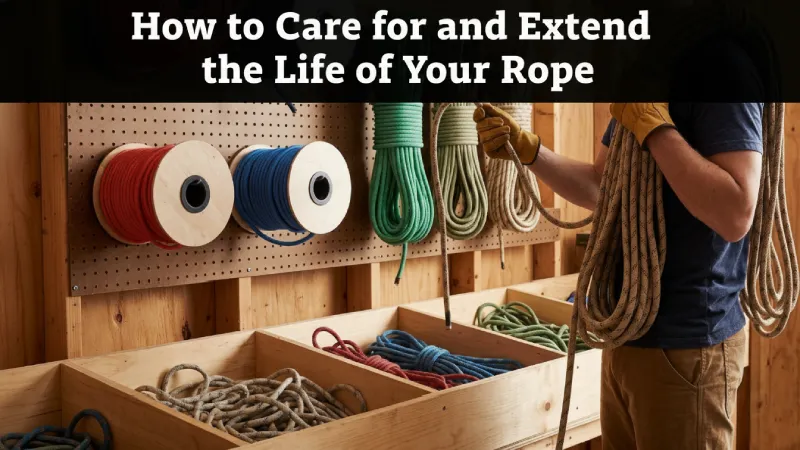
- Store in a cool, dry, shaded area - UV radiation is the number one enemy of synthetic ropes. Even stored rope left in direct sunlight will degrade over time.
- Keep away from chemicals - acids, solvents, bleach, and fuel can weaken polymer fibers rapidly. Store separately from any chemical storage areas.
- Coil loosely - tight coiling under tension creates internal stress in the rope structure. Hang coiled rope or store flat on shelves.
- Avoid rodent-accessible areas - rats and mice will chew through rope, especially natural-fiber cores in braided construction.
- Keep off the ground - direct contact with damp concrete or soil can promote fungal growth on rope sheaths.
Cleaning After Use
Dirt, sand, salt, and grit embedded in rope fibers act as an internal abrasive - cutting the fibers from within every time the rope is bent or loaded. Regular cleaning extends rope life substantially.
- Rinse with fresh water after marine or saltwater use - salt crystals left in the rope are highly abrasive when dry
- Wash with mild soap and a soft brush for heavily soiled rope - avoid stiff wire brushes that damage the outer fibers
- Air dry completely before coiling and storing - storing wet rope promotes mildew and weakens fiber bonding
- Never use high-pressure jets directly on the rope - this forces abrasive particles deeper into the construction
Regular Inspection
Visual and tactile inspection before each use is critical - especially for ropes used in safety-critical or load-bearing applications.
Abrasion Damage
Fuzzing, glazing, or worn flat spots on the outer surface indicate significant fiber loss. Look especially at points of contact with hardware.
Core Damage
Soft or spongy spots in twisted rope suggest the inner core has broken. Run the rope through your hands to feel for inconsistencies.
Discolouration
White streaks or powdering on PP/HDPE rope indicate UV degradation. Brown staining may indicate chemical contamination.
Kinks and Hockles
A hockle (corkscrew twist) permanently damages rope structure and drastically reduces break load. Never use a kinked rope under tension.
Correct Handling Practices
Many ropes are damaged not in service, but during deployment and recovery. Follow these handling best practices:
- Never stand in a rope coil - if the rope runs free under tension, it can tighten around feet or legs instantly
- Use appropriate sheave and block sizes - a sheave too small for the rope diameter causes excessive internal stress
- Avoid shock loading - sudden jerks and drops transfer loads far above rated working load limits
- Tie proper knots - incorrect knots can reduce rope break load by 40–60%. Use reef knots, bowlines, and clove hitches appropriately
- Avoid running over sharp edges - always use edge protectors or padded sleeves where rope contacts steel or concrete corners
Knowing When to Retire a Rope
No rope lasts forever. Using a degraded rope in a safety-critical application is far more costly than replacing it. Retire a rope immediately if you observe any of the following:
- Reduction of more than 50% in original diameter at any point
- Visible broken strands or yarns in the load-bearing structure
- Persistent kinks or hockles that cannot be straightened
- Chemical contamination (unknown substances, strong odour)
- Any rope that has been subjected to a shock load near its rated working limit
- Braided sheath completely worn through, exposing the core
A Note on Rope Lifespan
Even with no visible damage, synthetic ropes used in critical applications should be retired after a maximum of 2–5 years of regular service, depending on load intensity and environmental exposure. When ordering bulk rope for industrial or export packaging use, consider labeling each reel with the date of first use to track service age accurately.
At Rope Tech India Private Limited, every rope we manufacture undergoes quality control testing for tensile strength, diameter consistency, and material purity before dispatch. This ensures the rope you receive performs reliably from day one - and with proper care, continues to do so for years.
Why Rope Quality Matters Before Maintenance
Even the best maintenance habits cannot compensate for poor-quality rope. A rope manufactured from substandard raw materials, inconsistent fiber twisting, or without proper UV stabilisers will fail prematurely regardless of how well it is stored or cleaned.
Sourcing from an ISO 9001:2015 certified rope manufacturer like Rope Tech India Private Limited ensures the rope you maintain is worth maintaining. Our production facility in Bhavnagar, Gujarat uses premium PP, HDPE, nylon, and polyester raw materials with rigorous in-process quality checks at every stage.
When it's time to restock, reach out to us at +91 90545 25258 or marketing@ropetechindia.com for bulk pricing and export availability.